Wednesday, October 19, 2011

Gropiusstadt

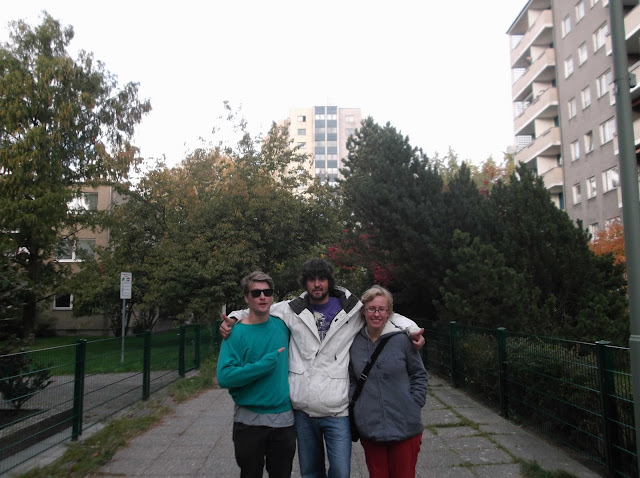
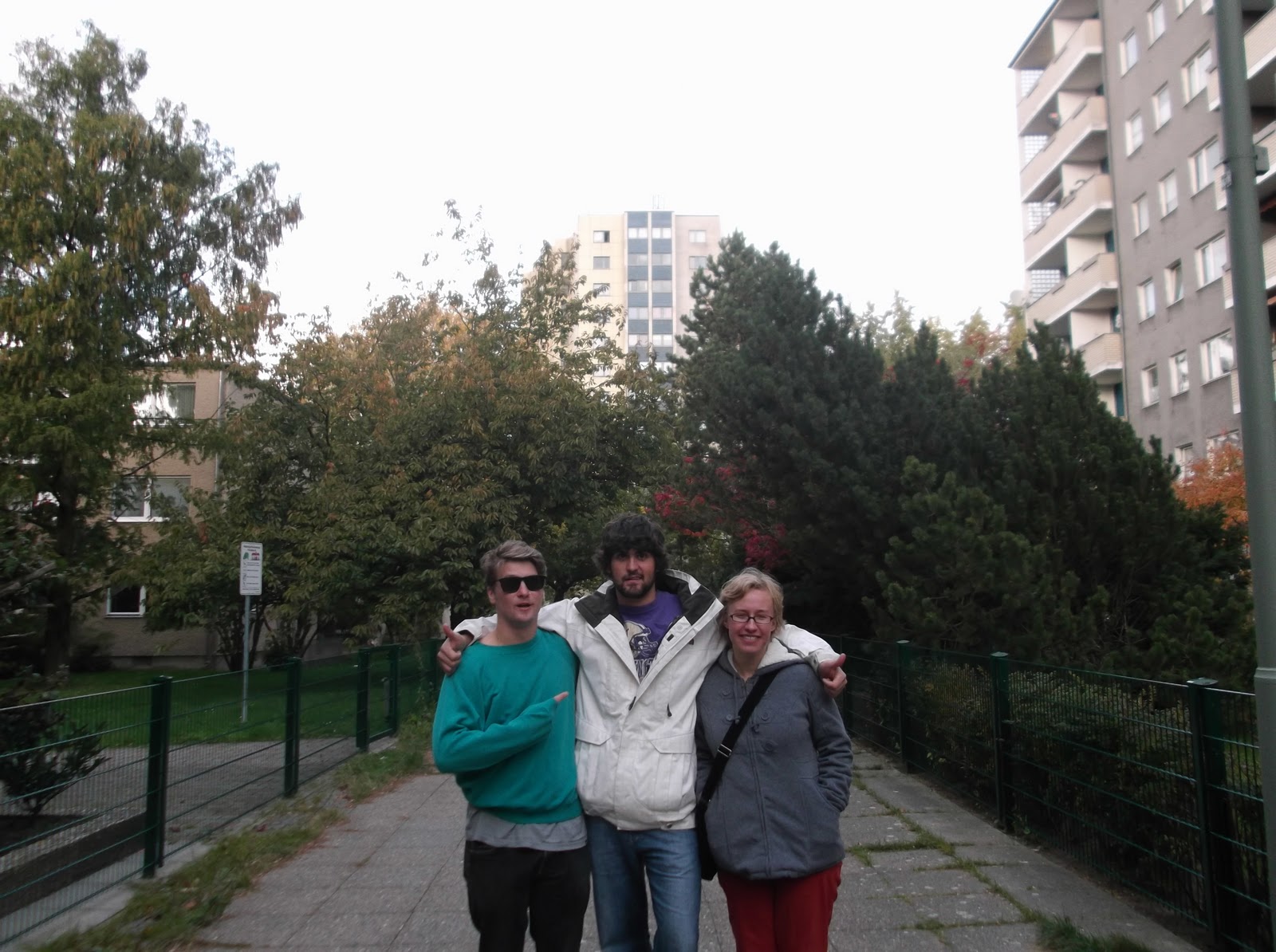
Gropiusstadt is an area in Neukölln, designed by Walter Gropius. Gropiusstadt's planning began in the 1950s, but the building of the Berlin Wall in 1961 necessitated serious amendments to the plan. Because the neighbourhood stood on the border with East Germany, the buildings could not be as spread out as was originally planned. Gropius believed the buildings should be no more than five stories high, but because of the lack of space they had to be much higher--Berlin's highest residential building is in Gropiusstadt, with 30 floors. The final design also had much less green space than Gropius had intended, and the Berlin Senate made changes to the plan against Gropius's wishes.


After visiting Gropiusstadt, I was left with mixed feelings regarding the aura and layout of the space. With only a prior knowledge of Gropius from his article, “Who Is Right? Traditional Architecture or Building in New Forms” my group and I were left to discover Gropius’ manifestation of the ideas he presented in 1926. While walking through what was Gropiusstadt, I was quickly able to recognize what Gropius perhaps had in mind for his utopia. Although the Bauhaus architect actually wished to have his design spread out over a larger amount of land, the general positionality he was aiming for, I believe, was achieved. Much of the land being used exploited space in the way he wished to, with large connections of housing. However, many of these buildings were taller than the architect originally had intended; this perhaps plays into the eerie feeling a visitor might experience when walking among the maze of functionalist housing on Johannesthaler Chaussee. Gropius also argued that mass prefabrication would not diminish individuality amongst housing units, as only structural elements would be copied and not whole buildings. However, I was aroused by a diverging impression of Gropiusstadt. I felt many of the buildings to be similar to the point of conformism. Although decoratives and variety are aesthetic, I feel that their presence is essential to human life. Being expressive is – in my opinion – a healthy way to continue existing in an often oppressive world, wherein artistic creativity is a cathartic outlet. Therefore, I do not believe that, in the words of Gropius, “variety exhibits senseless waste”. -Michelle
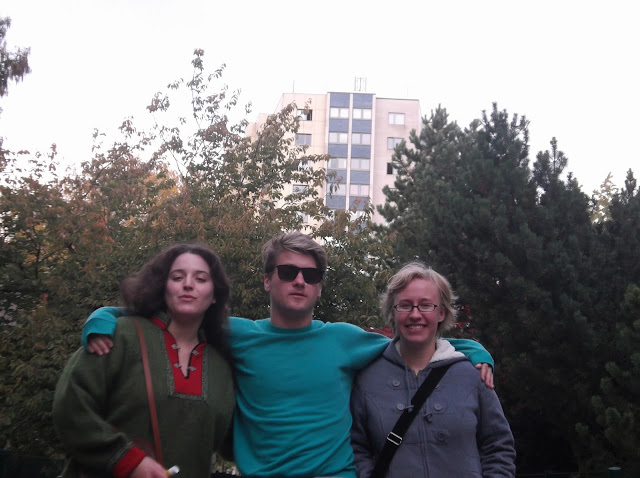
While walking through Gropiusstadt I couldn’t help but feel very isolated. The area was a ghost town, with inner streets that wound through the interior of the apartment complexes. It seemed desolate and shops were rarely seen. Instead of creating uniqueness from within unity, monotonous structures bared down on the viewer. Gropius’ vision to exploit the surrounding area with standardized buildings can certainly be felt in Gropiusstadt. All the buildings seemed to be built from the same building materials, and although most of the buildings were not exactly the same, they seemed to have a sense of uniformity about them. His dream to make a living area “orderly and calming through unity” fell short for me. Instead, it seemed oppressing and lacked a sense of community. In fact, the buildings seemed to create a wide gap that isolated people from reality. I believe spaces that seem to be more compact and individualistic create a stronger sense of community. The citizen is constantly surrounded by people and can create distinctive areas through the distinctive change of scenery. -Max

Saturday, October 15, 2011

Scrambled egg history


This week I've been noticing parts of the Berlin landscape that have been recycled or used in unexpected ways. That's the door to the Bauakademie, but it doesn't open onto the Bauakademie, because the Bauakademie no longer exists except as a canvas mock-up in its former location. It is now part of a different building. If you didn't know its history, it would seem simply a pretty door in a random building. Though inserting it in another building has preserved it, it has also obscured the door's history--and simultaneously made that history richer.

I happened upon the Give Box on a random tiny side street near Weinmeisterstrasse. The idea is that if you have something you don't need that you think someone else could use, you leave it in the Give Box, which is about the size of a wardrobe and has hangers for clothing and shelves full of stuff. It's tucked into an alcove on  the side of the street; you can't see it until you're standing next to it. It seems like an odd thing to run across, an odd use of public space in an oddly formal way--this is clearly a well-established thing, not just a "free stuff" box by the side of the road. Who knows how it started.

Nobody seems to know that statue's story. It stands in Viktoriapark, and it's a mystery who it represents and why it's painted as it is. The paint obscures the statue's identity, but if it were not painted it would be just another statue--and, frankly, I have seen more than enough statues.

The Bauakademie door and the statue are a good example of how history is visible here, but it's not always visible in legible, logically organized ways. The door isn't consistent with the building it's attached to, and the purple and silver paint isn't consistent with what looks like a statue of a nice 19th century gentleman. In Berlin, history is sometimes a bit of a jigsaw puzzle.

Saturday, October 8, 2011

Green space, urban space, I have said the word "space" too many times

I keep noticing, as with the Luisenstädtischer Kanal Park, green spaces that used to be something different--something far less green. Like Luisenstädtischer Kanal Park, the green space on the north bank of the Spree where the East Side Gallery is used to be the death strip. Görlitzer Park used to be a train station. It is in these places that I see the ideal of urban-rural space come alive. Some city planners may have been somewhat grateful to the bombing of World War II for clearing the room necessary to recreate a verdant, natural city, but there is a certain amount of cognitive dissonance in that--violent destruction creating space for beautiful nature. The East Side Gallery and the Luisenstädtischer Kanal Park, on the other hand, involved the removal of a violent space to create a green one. What was once a death strip and a no-man's-land is now a public park--an every-man's-land.
Görlitzer Park began in 1865 as Görlitzer Bahnhof, running trains to Cottbuss and Görlitz and to Vienna and various Polish cities. It was bombed in World War II and closed in 1951 because it was a West German train station that sent trains East. Most of the train station buildings were demolished, and in 1989 the space was used by an anarchist art commune. It became Görlitzer Park in the 1990s. Though the park is a green space that brings some nature into the city, it is still a very urban sort of green space. A couple of old station buildings are still there, housing a cafe, and there is something very urban about people's use of the park, grilling food, drinking beer, and hanging out.

To me, spaces like this that have taken concrete, urban, destructive spaces and made them green, stand in contrast with "nature band-aids", where thoroughly landscaped bits of greenery are installed in the design and planning process of new buildings, or artificially inserted on the street. Something about the history and evolution of spaces like the Luisenstädtischer Kanal Park and Görlitzer Park make them a more real part of urban space, while still being a part of nature. They are a more true remedy to the concrete of urban life than new, planned green spaces are.

Sunday, October 2, 2011

Dispatches from Melchiorstrasse #1

Arrived in Berlin last Tuesday morning. I have been to Alexanderplatz about five times, but until this morning had not explored the neighbourhood beyond the Kaiser's three blocks away. Alexanderplatz kind of reminds me of Westlake, and some bits of Mitte I've walked through kind of remind me of downtown Seattle, but I walked down Oranienstrasse and realized it doesn't remind me of anything.

St Michael Kirche, under construction.
The thing about living in a place with a lot of history is that it's full of funny contrasts. It's not strange to see graffiti (though nowhere in Seattle would you see so much of it), but it's strange to see a graffiti'd wall or a pink porta-potty next to a beautiful old church. It's a bit like being in multiple centuries at once--time lag mixed in with the jet lag.

Then there's also the places that you'd hardly believe used to be so different. I walked through the park that used to be in the Luisenstädtischer Kanal, which now includes a little lake (complete with turtles and a heron and some little birds that kind of look like sandpipers) and some nice paths. The canal became stagnant in the 1920s and was turned into a park, and when the Wall was built it followed the canal park on its southern side. In my walk I passed between crosswalks with the ordinary crosswalk lights to the ones with the little be-hatted Ampelmänner. Our apartments would have been inside East Berlin by one block.

Friday, September 23, 2011

Final dispatches from Seattle

At a ridiculous hour in the morning on Monday, September 26th I will get on a plane to Berlin, Germany. There I will spend ten weeks reading a lot and studying things and having adventures, all of which will be recorded for your perusal in this here blog.

The blog title comes from a Nazi newspaper, which is probably a creepy and not politically correct source, but I thought it was a funny phrase and wanted to bend it to my uses. The Völkischer Beobachter said in 1928 (quoted in Ladd, The Ghosts of Berlin) that Berlin is "A melting pot of everything that is evil--prostitution, drinking houses, cinemas, Marxism, Jews, strippers, negroes dancing, and all the vile offshoots of so-called 'modern art.'" I am all for drinking houses, cinemas, Jews, nudity, dancing, and art, and I don't think any of those things are evil. So really I am corrupting the Nazis' words and celebrating the free pursuit of modern art and all its vile offshoots, which, to be honest, are my favourite parts of Berlin history. Possibly also of life.

So, now that we are off to a vile beginning...